05 May 2026
Myth(os) or reality? How the pace of change is forcing crisis comms plans to evolve faster
In recent weeks, senior leaders at financial services firms around the world have reacted with concern at the emergence of Mythos – Anthropic’s new AI tool which reportedly has an unparalleled ability to identify and exploit weaknesses in global financial infrastructure.
The nub of the concern is that this is innovation moving faster than the rules and regulations that govern it, and the businesses and individuals affected by it. The concern expressed was operational, it was commercial – and it was also reputational, with real implications for crisis comms.
The story typifies how quickly the reputation risk landscape is changing for organisations everywhere. We are in a period where a multitude of factors, some newer and fast-growing, some well-established but no less prevalent, are landing at once.
AI-generated misinformation, fragmented media, political volatility at home and abroad, regulatory pressure, cyber risk and fragile public trust are just a few. All this is redefining what effective reputation management and crisis communications looks like, and creating an urgent need for a review and spring spruce-up of established practices and protocols.
Technology is the obvious driver of much of this evolution in reputation management, and for good reason. Research in America shows that CEOs see AI as their biggest business risk, overtaking geopolitical turmoil. The Mythos story exemplifies this, and the major driver here is pace of change.
Yes, the opportunities AI offers are huge and adoption is high, but are defences and procedures being updated as quickly as the new tools are being rolled out? The scale of the concern being reported would indicate not.
But tech is impacting reputation management and crisis comms in other ways too. Not least how it enables an issue to grow more quickly and in so many different ways.
Imagine you’re aware of a story breaking which could be a significant reputational issue. It could very easily start from a Tweet at 9am, be picked up by a blog, move through LinkedIn and other social channels, commented on by a trade union or campaign group, and splashed across a national homepage in time to feature on lunchtime news bulletins.
That dramatically reduces the time to initiate crisis comms protocols, establish facts, draft a holding position, set up monitoring and brief impacted stakeholders.
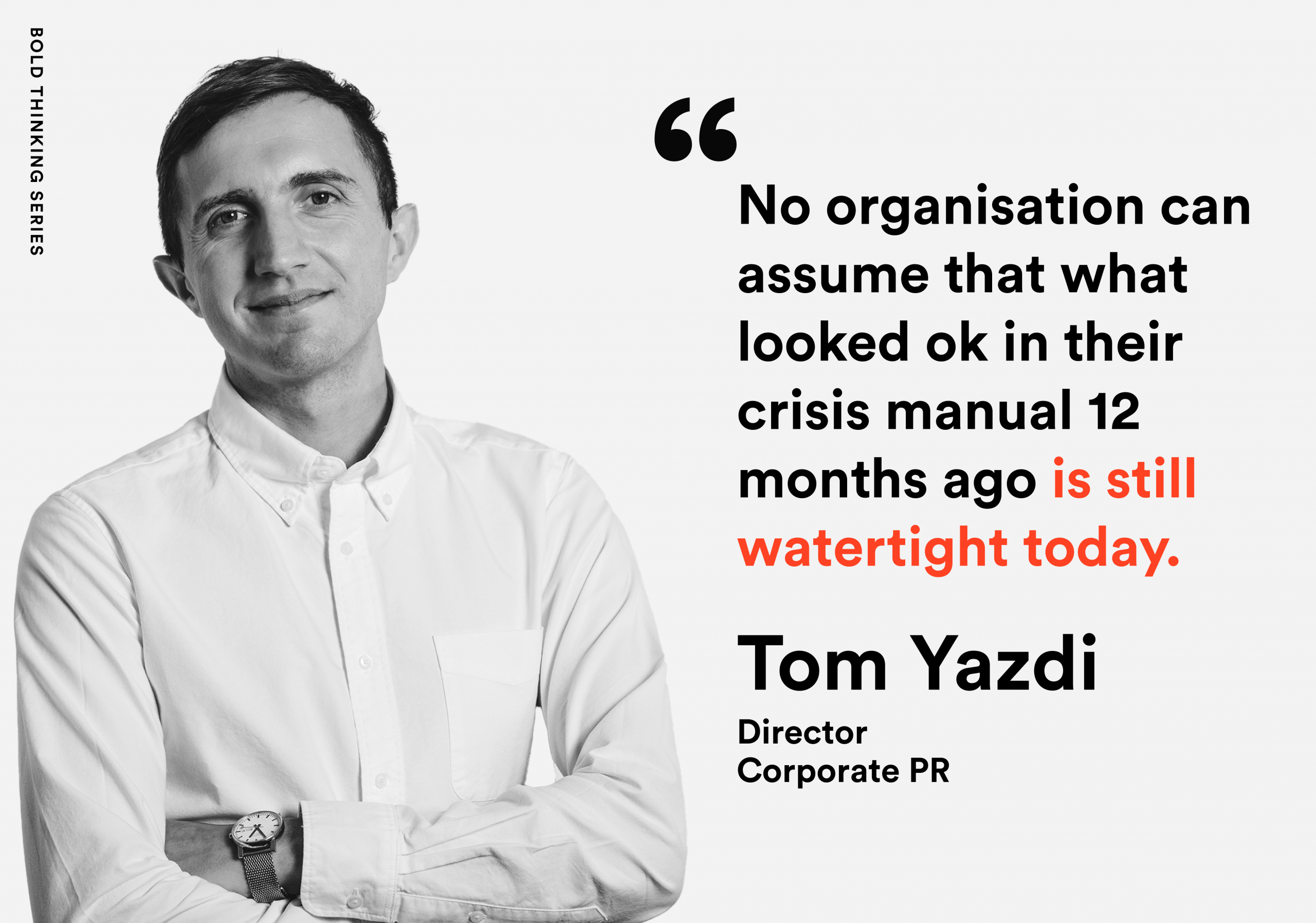
In recent times I’ve often heard it said that “reputation is now a boardroom issue”. Reputation management always should have been a boardroom issue. What cannot be disputed now is that no organisation can assume that what looked ok in their crisis comms manual 12 or even 9 months ago is automatically still watertight today.
In reality, no comms team or senior leadership can be in constant crisis review mode. So the real task here is to embed crisis communications strategy into a holistic company-wide approach to risk, one where a living breathing process regularly reviews risk as emerging or significant threats are identified.
In practice that means auditing plans, testing procedures, rehearsing awkward questions, and checking whether the organisation is ready for a crisis that starts outside traditional media, accelerates through social channels and demands a response from leadership before the facts are established. To some stakeholders, running mock crisis scenarios might feel like overkill. But as the saying goes, failure to prepare…
Now is also a good time to ensure that monthly risk reports, weekly news audits and ongoing stakeholder sentiment analysis is happening, and being seen and considered by the right people within the organisation.
At Boldspace we help organisations build and maintain that readiness, from reputation strategy and issue mapping to live crisis counsel and response planning. If your crisis plan has not been tested against the risks now shaping 2026, now is the moment to look again.
This article was written by Boldspace Brand Reputation Director Tom Yazdi.